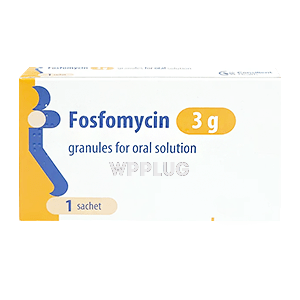
| Product dosage: 3g | |||
|---|---|---|---|
| Package (num) | Per sachet | Price | Buy |
| 1 | $42.35 | $42.35 (0%) | 🛒 Add to cart |
| 2 | $37.81 | $84.70 $75.62 (11%) | 🛒 Add to cart |
| 3 | $35.96 | $127.05 $107.89 (15%) | 🛒 Add to cart |
| 4 | $35.29 | $169.39 $141.16 (17%) | 🛒 Add to cart |
| 5 | $34.89 | $211.74 $174.44 (18%) | 🛒 Add to cart |
| 6 | $34.45 | $254.09 $206.70 (19%) | 🛒 Add to cart |
| 7 | $34.28 | $296.44 $239.97 (19%) | 🛒 Add to cart |
| 8 | $34.16 | $338.79 $273.25 (19%) | 🛒 Add to cart |
| 9 | $33.95 | $381.14 $305.51 (20%) | 🛒 Add to cart |
| 10 | $33.88
Best per sachet | $423.48 $338.79 (20%) | 🛒 Add to cart |
Synonyms | |||
Fosfomycin: Targeted Antibiotic Therapy for Urinary Tract Infections
Fosfomycin tromethamine is a broad-spectrum bactericidal antibiotic indicated primarily for the treatment of uncomplicated urinary tract infections (UTIs) caused by susceptible strains of designated microorganisms. As a phosphonic acid derivative, it exerts its antibacterial effect by inhibiting the early stages of bacterial cell wall synthesis. Its unique mechanism of action, favorable pharmacokinetic profile, and convenient single-dose oral regimen make it a valuable therapeutic option in an era of increasing antimicrobial resistance. This agent is particularly noted for its activity against a range of Gram-positive and Gram-negative uropathogens, including some multidrug-resistant strains.
Features
- Chemical classification: Phosphonic acid derivative antibiotic
- Available formulation: Oral sachets (fosfomycin tromethamine equivalent to 3g fosfomycin)
- Mechanism of action: Irreversible inhibition of UDP-N-acetylglucosamine enolpyruvyl transferase (MurA), an enzyme essential for peptidoglycan cell wall synthesis
- Spectrum of activity: Effective against Escherichia coli, Enterococcus faecalis, and other common uropathogens
- Pharmacokinetics: Rapid absorption, achieves high urinary concentrations within 2–4 hours, with urinary excretion of approximately 38–50% of the administered dose as active drug
- Regulatory status: FDA-approved prescription medication
Benefits
- Single-dose oral regimen enhances patient compliance and reduces the risk of premature discontinuation of therapy
- Maintains efficacy against many multidrug-resistant uropathogens, including some extended-spectrum beta-lactamase (ESBL)-producing Enterobacteriaceae
- Favorable safety profile with generally mild and transient adverse effects compared to many alternative antibiotics
- Low potential for drug-drug interactions due to minimal hepatic metabolism and lack of effect on cytochrome P450 enzymes
- Can be administered without regard to meals, offering convenience in dosing
- Demonstrated clinical efficacy in eradicating susceptible pathogens in uncomplicated UTIs with symptomatic resolution typically within 2–3 days
Common use
Fosfomycin tromethamine is primarily indicated for the treatment of uncomplicated urinary tract infections (acute cystitis) in women caused by susceptible strains of Escherichia coli and Enterococcus faecalis. It may also be used off-label for complicated UTIs, bacterial prostatitis, and as surgical prophylaxis in certain urological procedures when susceptibility testing supports its use. The drug is particularly valuable in cases where first-line agents are contraindicated or when infections are caused by multidrug-resistant organisms. Clinical decisions should be guided by culture and susceptibility testing whenever possible, especially in recurrent or complicated infections.
Dosage and direction
The standard adult dosage for uncomplicated UTIs is a single 3g sachet administered orally. The powder should be dissolved in ½ glass (approximately 4 ounces) of cold water immediately before consumption—do not use hot water. Stir to dissolve completely and drink the entire solution. The dose may be repeated once after 24–48 hours for persistent infections, though this should be guided by clinical assessment and susceptibility data. For pediatric use (ages 12 and older), dosage should follow adult recommendations. Administration is typically recommended at bedtime after emptying the bladder to maximize urinary concentration and contact time with pathogens.
Precautions
Use with caution in patients with renal impairment (creatinine clearance <50 mL/min) as excretion may be delayed, though dosage adjustment is generally not required for single-dose therapy. Monitor diabetic patients carefully as the sachet formulation contains approximately 2.8g of sucrose. Fosfomycin should be used during pregnancy only if clearly needed, though animal studies have not shown teratogenic effects. Exercise caution when prescribing to elderly patients due to potential age-related renal function decline. As with all antibiotics, fosfomycin may cause overgrowth of nonsusceptible organisms, including fungi; monitor for signs of superinfection.
Contraindications
Hypersensitivity to fosfomycin or any component of the formulation constitutes an absolute contraindication. The product contains sucrose and is contraindicated in patients with hereditary fructose intolerance, glucose-galactose malabsorption, or sucrase-isomaltase deficiency. Should not be administered to children under 12 years of age due to limited safety and efficacy data in this population. Avoid use in patients with severe renal impairment (creatinine clearance <10 mL/min) unless potential benefits outweigh risks.
Possible side effect
The most commonly reported adverse reactions (>1%) include diarrhea (9.1%), vaginitis (5.5%), nausea (4.1%), headache (3.9%), dizziness (1.3%), and dyspepsia (1.1%). Less frequent side effects may include abdominal pain, rhinitis, pharyngitis, back pain, menstrual disorder, and rash. These effects are generally mild to moderate in intensity and self-limiting. Serious adverse reactions are rare but may include severe allergic reactions, Clostridium difficile-associated diarrhea, and hematologic abnormalities. Patients should be advised to report persistent or severe symptoms promptly.
Drug interaction
Fosfomycin demonstrates a low potential for pharmacokinetic drug interactions due to minimal metabolism and lack of effect on cytochrome P450 enzymes. However, metoclopramide may decrease serum concentrations and urinary excretion of fosfomycin, potentially reducing its efficacy—concomitant use should be avoided. Cimetidine may increase fosfomycin concentrations in plasma and urine. No clinically significant interactions have been observed with oral contraceptives, warfarin, or antacids containing calcium or magnesium. As always, maintain vigilance when co-administering with other nephrotoxic agents.
Missed dose
As fosfomycin is typically administered as a single-dose regimen, the concept of a “missed dose” does not generally apply. If a patient fails to take the medication at the prescribed time, it should be taken as soon as remembered unless it is nearly time for a repeat dose (in cases where a second dose has been prescribed). Do not double doses. For patients prescribed multiple doses (off-label regimens), take the missed dose as soon as remembered unless it is within a few hours of the next scheduled dose, in which case skip the missed dose and resume the regular schedule.
Overdose
Experience with fosfomycin overdose is limited due to its single-dose administration. Single doses up to 24g have been administered without serious adverse effects. In case of suspected overdose, symptomatic and supportive care is recommended. Fosfomycin is eliminated primarily by renal excretion; adequate hydration should be maintained to facilitate elimination. Hemodialysis may remove fosfomycin, though specific data on clearance rates are limited. Monitor renal function and electrolyte status in significant overdose situations. Contact a poison control center for latest guidance.
Storage
Store at controlled room temperature (20°-25°C or 68°-77°F) with excursions permitted between 15°-30°C (59°-86°F). Keep the sachet in the original package to protect from moisture. Do not use if the sachet is torn or damaged. Once mixed with water, the solution should be consumed immediately—do not store for later use. Keep out of reach of children and pets. Do not use after the expiration date printed on the packaging.
Disclaimer
This information is provided for educational purposes only and does not constitute medical advice. The prescribing physician should be consulted for diagnosis and treatment of medical conditions. Dosage and administration may need to be adjusted based on individual patient characteristics, pathogen susceptibility, and clinical response. The full prescribing information should be reviewed before initiating therapy. Antibiotics should be used only when clearly indicated to reduce the development of drug-resistant bacteria.
Reviews
Clinical studies demonstrate fosfomycin’s efficacy with bacterial eradication rates of approximately 70-90% in uncomplicated UTIs caused by susceptible organisms. A meta-analysis of randomized controlled trials found comparable efficacy to other standard antibiotics with a favorable side effect profile. Many clinicians report particular value in treating multidrug-resistant infections where options are limited. Some studies note higher relapse rates compared to longer-course therapies, though this must be balanced against the advantages of single-dose administration. Real-world evidence continues to support its role in appropriate clinical scenarios, especially with growing antimicrobial resistance concerns.